 |
| The Plant-Based Future |
The food revolution has arrived — and it’s sizzling on your burger bun. In 2026, lab-grown meat has officially gone mainstream, making its way into fast-food chains worldwide. What was once a futuristic idea has now become a global movement, blending science, sustainability, and taste in every bite.
What Exactly Is Lab-Grown Meat?
Lab-grown meat, also known as cultivated meat or cell-based meat, isn’t fake — it’s real meat grown from animal cells, not slaughtered animals.
Scientists take a few cells from a living animal and grow them in nutrient-rich environments that mimic the body’s natural growth process.
The result? Authentic meat without the environmental and ethical downsides of traditional farming.
This technology has been in development for over a decade, but 2026 marks the year it hit the mainstream, with major fast-food brands like McDonald’s, KFC, and Burger King launching limited-edition cultivated meat menus.
Fast-Food Giants Join the Revolution
Fast-food companies are embracing sustainability faster than ever before. Here’s how they’re adapting:
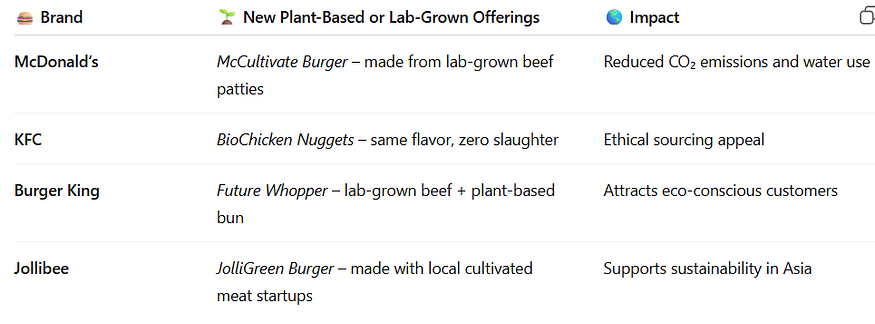 |
Consumers are excited — not just for the novelty, but for the taste. Early reviews say it’s “indistinguishable from the real thing.”
Why the Shift? Sustainability Meets Demand
Traditional livestock farming contributes to:
- 15% of global greenhouse gas emissions
- Massive water and land consumption
- Animal welfare concerns
Lab-grown meat offers a cleaner, greener, and cruelty-free alternative. Studies show cultivated meat can reduce emissions by up to 90% and cut water use by 80% compared to conventional farming.
For fast-food chains, the shift isn’t just ethical — it’s smart business. As Gen Z and Millennials demand sustainable choices, restaurants that adapt are winning loyalty and headlines.
The Science Behind the Taste
So how does it actually taste like real meat?
Scientists grow muscle and fat cells in bioreactors that replicate animal tissue. The result has the same proteins, fats, and textures — because, chemically, it is real meat.
Some companies are even blending lab-grown meat with plant-based proteins to enhance nutrition and cut production costs. The end product: burgers and nuggets that are better for you and the planet.
Challenges Ahead
Despite the excitement, challenges remain:
- High production costs (though dropping fast)
- Regulatory hurdles in some countries
- Public skepticism about “lab-made” food
However, with billions invested and governments supporting food tech innovation, experts predict cultivated meat will make up 10–20% of global meat consumption by 2030.
A New Era of Fast Food
Imagine walking into your favorite fast-food chain and choosing between traditional, plant-based, or lab-grown meat — all cooked fresh and guilt-free.
That’s the reality of 2026’s plant-based future, where sustainability and flavor finally meet at the drive-thru.
As one KFC executive put it:
“We’re not just serving food anymore — we’re serving the future.”
The rise of lab-grown meat in fast-food chains marks a turning point in global dining culture. What began as a scientific experiment is now a mainstream movement — one that could feed billions without harming animals or the planet.
The plant-based future isn’t coming.
It’s already here — and it’s delicious.
Suggested for you: Online Game Offers
Comments
Post a Comment